Pay in installments of $7.49 with
,
and
Shipping Estimate
USA
- USA
- CAN
- USA
- CAN
Ships within 48 hours · Estimated delivery Jun 28 - Jul 3
For Your Every Summer RSVP, with Code: SUMMER15
Description
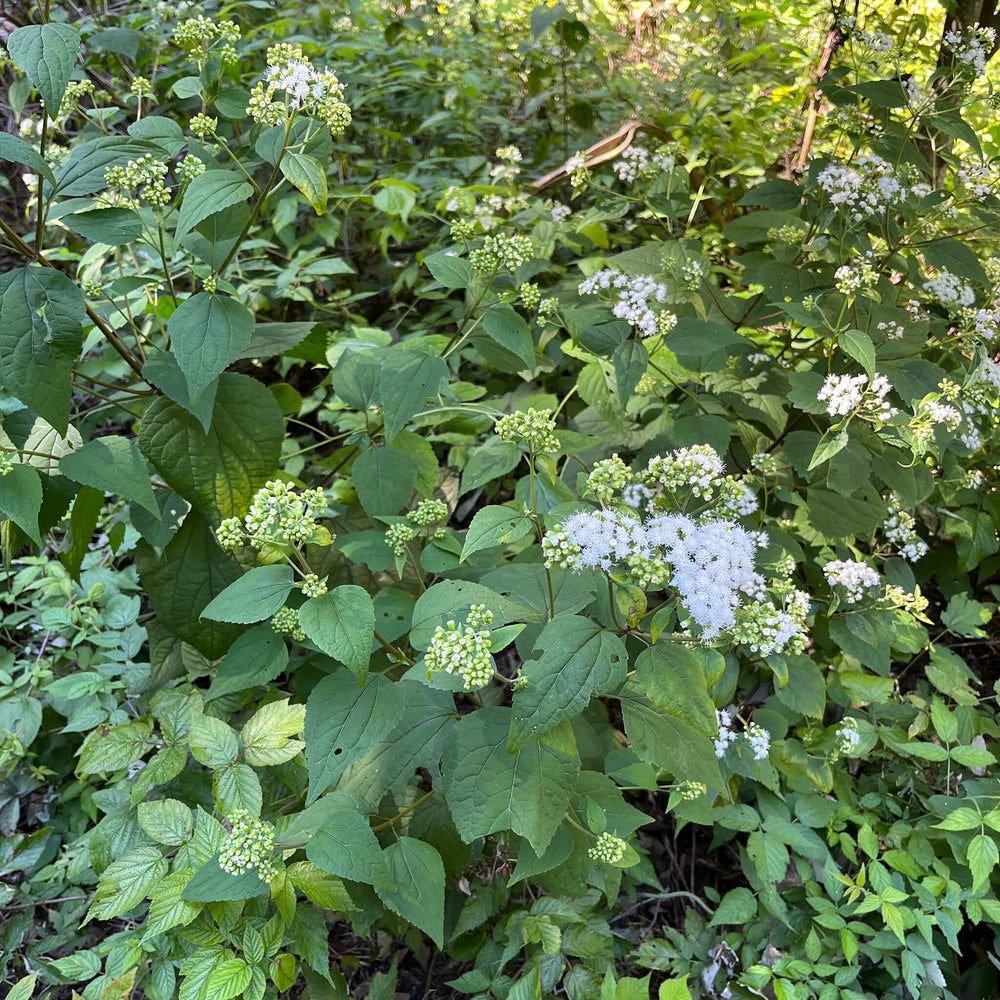
ageratina altissima uses Common White Snakeroot SeedsFor successful seedlings, see the growing notes at the bottom of the page! Common white snakeroot (Ageratina altissima) is a native perennial plant found in shaded forests and along roadsides in North America. It can grow between 30 and 120 centimetres tall and is recognized for its dense clusters of small white flowers that bloom from late July through September. Its dark green, oval, toothed leaves and straight, unbranched stems provide a vertical
For successful seedlings,
see the growing notes at the bottom of the page!
Common white snakeroot (Ageratina altissima) is a native perennial plant found in shaded forests and along roadsides in North America. It can grow between 30 and 120 centimetres tall and is recognized for its dense clusters of small white flowers that bloom from late July through September. Its dark green, oval, toothed leaves and straight, unbranched stems provide a vertical element in shaded gardens. The white snakeroot's flowers are particularly attractive to pollinators such as bees and butterflies.
Furthermore, common white snakeroot is recognized as a keystone plant for biodiversity in many North American ecoregions, as it supports a wide variety of insects and birds that rely on its ecological resources.
Sociability index: 3 → Indicates the plant’s behaviour in space and its interactions with other plants.
Medicinal and Culinary Uses
White snakeroot has no culinary or medicinal use due to its toxicity. It contains a toxic compound called tremetone, which can cause poisoning in animals, especially livestock, and humans through contaminated milk, historically known as "milk sickness."
Ecological Roles
Despite its toxicity, white snakeroot plays an important role in forest and shaded ecosystems. Its nectar-rich white flowers are a valuable resource for pollinators, particularly bees and butterflies, in late summer. This plant also supports some specialized herbivorous insects. After flowering, its seeds are dispersed by the wind, allowing it to spread in forests and clearings.
White snakeroot seeds require cold stratification to ensure germination. See the growing notes below for more details.
Akène cannot assume any responsibility for the use of plants for therapeutic purposes. Always seek advice from a professional before using a medicinal or edible plant.
Shipping Notes
- Free Standard Shipping on $100+ Orders to the USA.
- Except Preorder products are shipped in 48 hours.
- Delivery to the USA:
- Standard Shipping : 3-10 business days
- If time is of the essence, please consider selecting expedited delivery for faster service.
Exchange/Return Notes
- We offer a 30-day return/exchange service after receiving.
- Final sale items are not eligible for returns or exchanges.
- To process your return/exchange, please contact us at [email protected]
- Please click here for more details>>> Return & Exchange Policy